Isaac Ogle
2/11/1886 – 8/1/1975
Carroll County, Little Vine
(submitted by Josh Harrod)
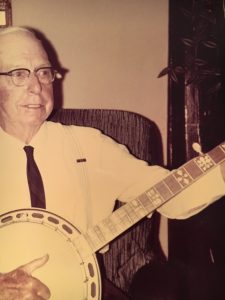
Hear Ike play Old Joe Clark, Pretty Little Girl and Sally Ann
Isaac Ogle, sometimes known as Ike, was born in Carroll County, VA on February 11, 1886. The fourth of ten children, he was raised in the Mount Zion community, near Woodlawn. On December 23, 1903, he married Della Jane Surratt, who grew up in Little Vine, located between Sylvatus and Laurel. In the first 28 years of their marriage, they had 14 children and moved 15 times before finally settling into Della’s father’s homeplace, the Gabriel Surratt farm, way down in a dark holler off of Little Vine.
Most of the 15 moves were to and from farms owned by various relatives around Little Vine, Mount Zion and the Shorts Creek community close by Austinville. According to Della Jane’s ledger book and journal, they scraped out a patchwork living from subsistence farming: sowing rye, buckwheat, field oats and of course, corn. Ike also brought in money by training horses and hauling logs, railroad ties, fertilizer, and wheat. Several times they left Carroll County to find work, with Isaac going on his own to Barton, Ohio for almost a full year. They lived 9 months in Superior, WV working timber, and spent five years in the Back Creek community of Pulaski County, VA improving a rented farm.
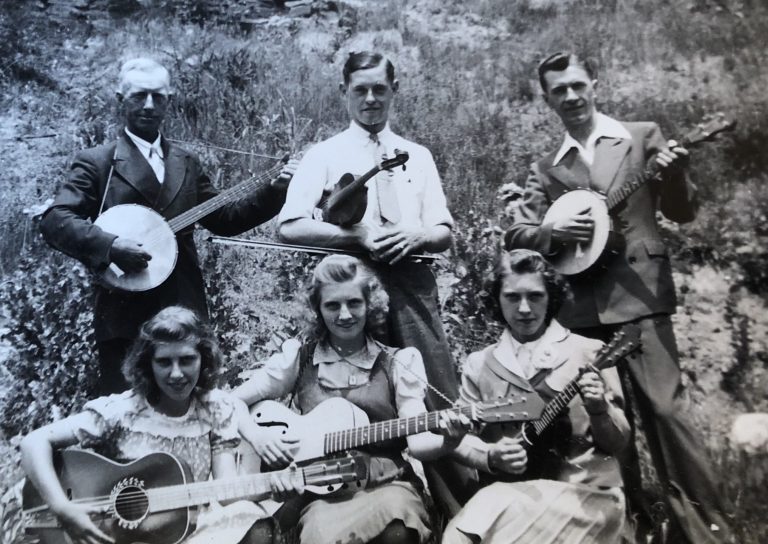
Isaac’s sole living child, the 13th of the fourteen children, has no recollection of hearing how or when her father started playing the banjo. It was always part of her life. 97 years old at the time of this writing, Nellie Ogle Slate recalls walking in the dark as a little girl to house dances near Sylvatus, where Ike would play with unrecollected fiddlers and guitar pickers. More definitively, she remembers him sitting down by the woodstove at home to play his banjo in the evenings after supper. Occasionally she and some of her siblings would join in on guitar, mandolin, and pump organ.
The recordings of Isaac playing clawhammer banjo were made in the late 1960’s or early 1970’s by his youngest child, who distributed them only to family on cassette tapes. Ike’s banjo style has nothing to do with radio or with records. His playing was never put on wax by northern entrepreneurs exploiting hillbilly acts in the late 1920’s, nor was he ever sought out by folklorists, anthropologists, and hippies in the 1960’s.
However, on this lone recording, you hear clawhammer banjo as it was heard many times in the Blue Ridge: in its natural setting, crude, powerfully rhythmic, and yet delicate, with the drive to carry a dance all by itself. This is the essence of Virginia clawhammer in the early 1900’s.
As such, his banjo playing, like his life, provides a glimpse into the rawness of mountain life in southwestern Virginia around the turn of the 20th Century. It is listening to the mountains themselves.