Jont Blevins
6/9/1900 – 9/7/1995
Grayson County, Whitetop
Hear and Jont Blevins play Cumberland Gap
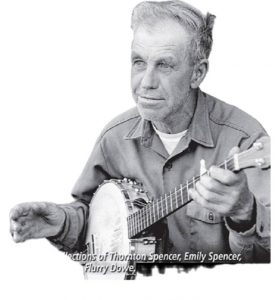
Jont Blevins is an important figure in the distinct sound of Whitetop Mountain based old time music. Isolated by the sheer height of the area’s peaks, Mt. Rogers and White top, Jont learned banjo as a boy, in a time before radio and other media had permeated the State’s highest mountains. Learning to play from such powerful local sources as banjoist and fiddler, Emmet Long, Blevins quickly established himself as one of the major figures in the regions old time music scene.
Among those he played with, influenced, or learned from are a virtual “who’s who” of the region’s unique dance style of old time music. Among his contemporaries that he regularly played with were Corbett Stamper, Munsey Galtney, Stuart Carrico, Dean Sturgil, Thornton Spencer, Enoch Rutherford, and the legendary Whitetop fiddler, Albert Hash. Blevins’ style was a fiddler’s dream: highly rhythmic with few melodic overtones. This style set a solid, wild rhythmic beat that not only fiddlers, but Whitetop dancers thrived on.
Blevins was a tobacco farmer in the area as well as a musician and often traded banjo lessons to students in return for hard work on his farm. Among his most noted students were Flurry Dowe, a young man who had been groomed by Hash and Spencer to fill the role of banjo player in the Whitetop Mountain Band in the early 70’s. At the age of 17, Dowe, who had literally been dumped on the mountain by his sister and brother in law who went off to get married, lived and worked on Blevins’s farm in exchange for learning the Whitetop style of banjo.
In addition, Emily Spencer, wife of Thornton, and the longest running member of the Whitetop band learned her driving banjo style from Jont. Emily, who until meeting Blevins was primarily a guitar player, is now considered one of the Masters of Whitetop banjo.
Blevins was a popular figure at local fiddler’s contests, usually winning first or second place in banjo. He did not, unfortunately record his style commercially, and one of the few recordings made of his playing was recorded by folklorist Blanton Owen on a collection for Rounder Records titled “Old Originals (1976).” In addition, The Field Recorder’s Collective has issued 21 tracks of his playing on a CD that brings together home recordings made by Emily and Thornton Spencer and Flurry Dowe.
In Kevin Donleavy’s highly regarded book about musicians in SW Virginia, “Strings of Life” (Pocahontas Press, 2004), fiddler Thornton Spencer is quoted as characterizing Blevins’ style as: ”more authentic than anyone else’s.” Why? “He learned it before records came out, and didn’t learn anything new after records came out,” said Spencer.